
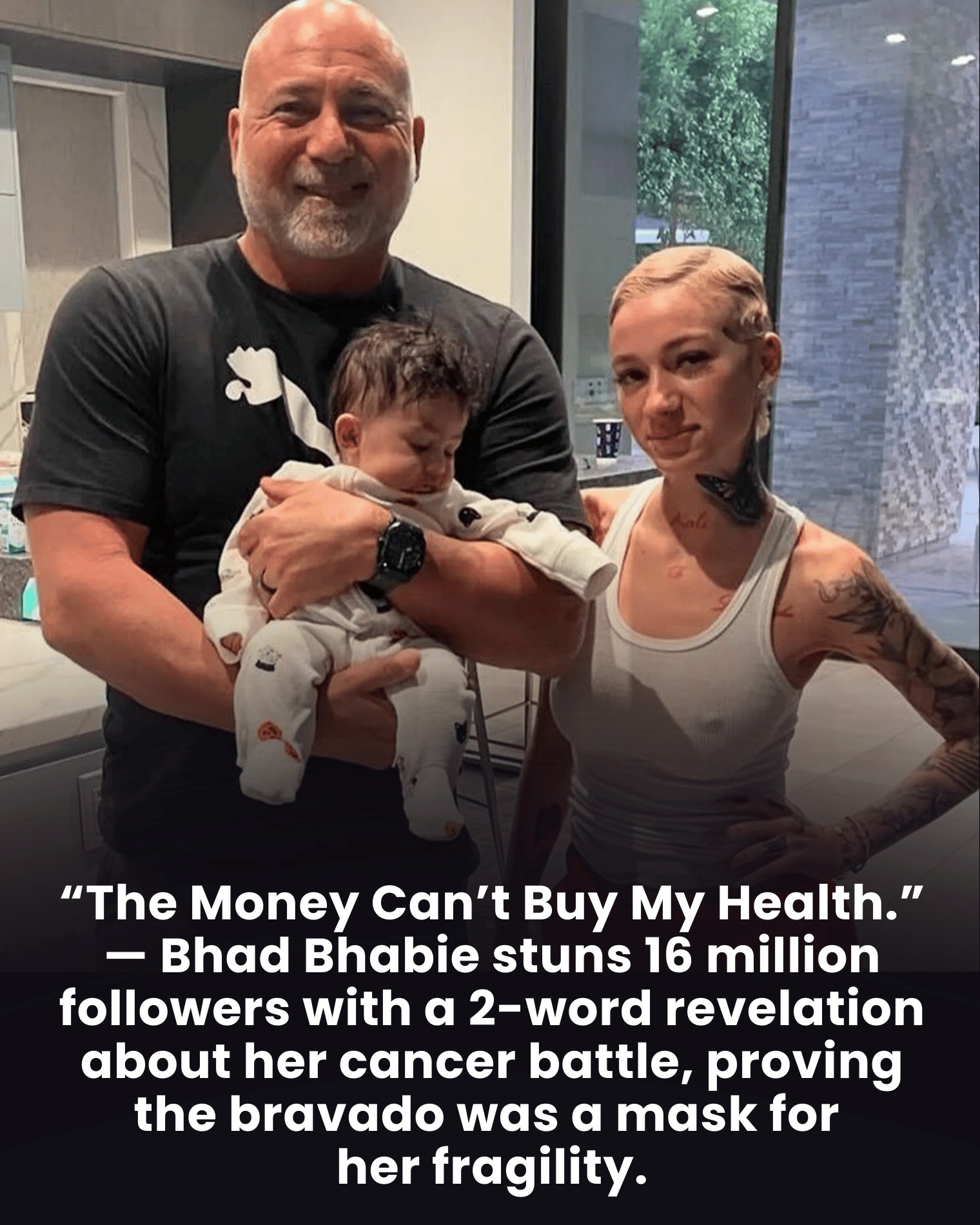
For years, Bhad Bhabie built her public identity on defiance. From viral teenage notoriety to platinum plaques, Danielle Bregoli cultivated an image of unshakable bravado. Online critics bounced off her. Headlines fueled her. Confidence was currency, and she spent it loudly.
So when her recent posts showed a noticeably thinner, quieter version of the 21-year-old, fans immediately speculated. Social media, never gentle, filled the silence with rumors. Some mocked her appearance. Others accused her of chasing attention. Few guessed the reality was far heavier than gossip.
In a move that stunned her 16 million followers, she finally shared the truth: cancer.
The revelation came with just two stark words, cutting through months of speculation. No theatrics. No dramatic monologue. Just a reality that reframed everything people thought they were seeing on their screens.
For someone whose brand was built on confrontation, the vulnerability was jarring. This was not a feud to win or a comment section to dominate. It was a private, internal battle unfolding under public scrutiny. The girl who once sparred with critics onstage was now facing something far less visible — and far more unforgiving.
Cancer does not care about follower counts. It does not negotiate with fame or wealth. In sharing her diagnosis, Danielle acknowledged something many celebrities quietly confront: money can amplify comfort, but it cannot purchase immunity from illness. "The money can't buy my health" became the unspoken truth beneath her announcement.
Fans who had criticized her sudden weight loss began to understand the context. Treatment can be grueling. Medication can drain energy, alter appearance, and strain even the strongest spirits. For a young woman barely into adulthood, the confrontation with mortality can feel surreal. Twenty-one is an age associated with beginnings, not hospital appointments and side effects.
Yet her decision to speak up carried a different kind of strength. Public figures often hide serious diagnoses out of fear of being defined by them. Danielle chose to get ahead of the narrative. By naming it herself, she reclaimed control — not of the illness, but of the story surrounding it.
There is a cruel irony in navigating such a diagnosis in the age of constant visibility. Every photo is analyzed. Every expression becomes a headline. Illness, which demands rest and privacy, collides with an audience trained to expect constant updates. The pressure can compound the exhaustion.
Still, beneath the bravado that once made her famous, there has always been resilience. Reinvention has defined her trajectory — from viral controversy to music success to entrepreneurship. This chapter, however, is not about reinvention. It is about endurance.
The disclosure also sparked a shift in tone among her followers. Messages of support replaced mockery. Critics quieted. For perhaps the first time in years, the conversation centered not on controversy but on compassion.
Danielle Bregoli's announcement does not erase her past persona. But it reveals the human being beneath it — a young woman confronting fear, uncertainty, and the limits of control. The bravado was armor. The diagnosis forced it off.
And in that rawness lies something more powerful than defiance: honesty.